


All-Natural Ingredient Formula

Made in The United States

No Dangerous Side Effects

No Fillers and Gluten-Free

Highest Quality Liquid Glucosamine

Synflex® Liquid Glucosamine Chondroitin Supplements
A Powerhouse Joint Pain Relief Product
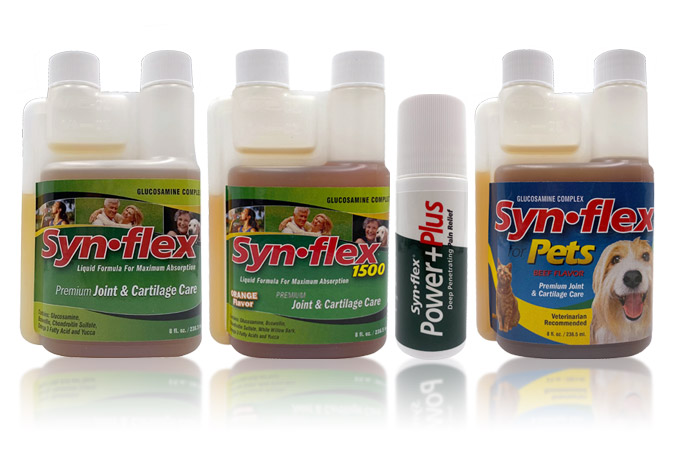
Synflex is a high-quality liquid Glucosamine Chondroitin formula that was designed for fast absorption and greater bioavailability. It is one of the reasons Synflex® arthritis joint supplements have sold over 1 million bottles around the world. Male and female arthritis sufferers, athletes and family pets have made Synflex a household name in over 100 countries.
What so many of our customers love about Synflex® is that we can help them and their pets. Knowing that you love your family pets and you want them to have the best in joint care as well, we suggest using Synflex® Liquid Glucosamine Chondroitin for Pets.
Over 1 Million Bottles Of Liquid Glucosamine Sold
Powerful Liquid Glucosamine Chondroitin Formula
Our goal is to provide you with a healthier and happier lifestyle. If you are among the millions who suffer from the chronic, debilitating issues caused by arthritis, you now have a solution that works. Our liquid glucosamine chondroitin arthritis supplements alter your lifestyle by strengthening your joints and reducing pain.
Synflex® is formulated using pharmaceutical quality glucosamine sulfate and glucosamine HCL, along with ten other beneficial ingredients that assist in promoting healthy joints. Adding Synflex to your routine is easy. Simply take our liquid glucosamine supplment as directed and you can improve your lifestyle! Try Synflex today!
Who Should Take Glucosamine Chondroitin?
Glucosamine chondroitin supplements are often used to relieve the symptoms of joint pain and bone conditions. While some people take supplements that only contain one or the other, the combination could have better results in relieving pain and slowing the destruction of cartilage in joints. Because of that, Synflex’s liquid glucosamine chondroitin formula can be taken by a variety of individuals who suffer from bone and joint problems such as:
- Individuals with Arthritis
It’s very common for people to change their diets to ease arthritis pain. Most of them add supplements that contain Glucosamine Chondroitin. - People with Osteoarthritis
Since osteoarthritis destroys cartilage, people with the disease may use Glucosamine Chondroitin daily. Many of them report slower disease progression and less pain. - Anyone with Sore Joints
People who have sore knees, hips, ankles, elbows, shoulders or other joints can take Glucosamine Chondroitin. The ingredients in Synflex could provide relief if cartilage deterioration is the cause. - Athletes of All Sports
Compared to most people, athletes are hard on their joints. They can take glucosamine Chondroitin supplements to relieve associated joint pain. - Pets with Bone and Joint Diseases
Humans aren’t the only living beings who suffer from bone and joint afflictions. Glucosamine Chondroitin found in Synflex can help relieve joint pain in pets.
In order to get the fastest and best results from bone and joint nutritional supplements, people and pets should take Glucosamine Chondroitin in a liquid form rather than the pill form. The reason is that the liquid ingredients are absorbed and bioavailable faster. Also, pills tend to contain fillers and binders, which make them less absorbable and bioavailable. The outside coating can also prevent the supplements from fully dissolving in the digestive tract.
Why Choose Synflex?
If you’re among the millions of Americans who suffer from the debilitating effects of arthritis, osteoarthritis or other joint-related pain, Synflex offers a liquid glucosamine chondroitin formula that works. Our formula strengthens your joints so that you can have a happier, healthier lifestyle. Here are several reasons why you should choose our liquid glucosamine chondroitin formula to ease joint pain.
Highest Quality Liquid Glucosamine Chondroitin
Synflex is made with pharmaceutical-quality glucosamine chondroitin, so it’s 98% pure. Plus, it’s combined with 10 other natural ingredients. The liquid form supports fast-acting absorption and improved bioavailability. Compared to glucosamine capsules, pills and powders with an absorption rate of 15% to 20%, our liquid formula has an absorption rate of 80% to 85%. For these reasons, Synflex has proved to be effective.
All-Natural Ingredients
The pharmaceutical-quality ingredients, vitamins and minerals that we use in Synflex are completely natural. Here’s a quick look at these ingredients:
- Glucosamine stimulates the production of essential building blocks for cartilage.
- Chondroitin sulfate attracts fluids to increase cartilage nutrients and resilience and to block cartilage-destroying enzymes.
- Manganese (Ascorbate) helps the body process the amino sugar, aids normal bone growth, and is used to produce energy and form cartilage. It supports the formulation of synovial fluid to help lubricate your joints as well.
- Vitamins A, C and E are essential for your health because they act as antioxidants by stopping the destruction of cells.
- Omega-3 and omega-6 fatty acids are anti-inflammatory agents that metabolizes linoleic acid into gamma linolenic acid to relieve inflammation in your joints.
- Boswellic acids are anti-inflammatories as well as anti-arthritic agents that improve blood flow to your joints and maintain blood vessel integrity.
- Bromelain cleans debris out of your joints, restores the balance of fluid and reduces inflammation and swelling.
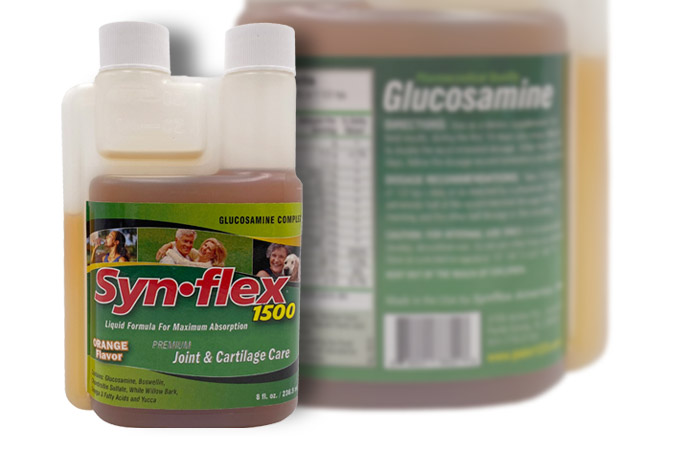
In addition, Synflex 1500 is made with white willow bark. This ingredient contains salicin, which your body converts into salicylic acid. It reduces inflammation and the occurrence of prostaglandins, which trigger inflammation and discomfort.
Benefits Of Synflex Liquid Glucosamine Chondroitin

No Dangerous Side Effects
Our liquid glucosamine chondroitin formula has very few side effects compared to the dangers of taking nonsteroidal anti-inflammatory drugs. While traditional medications can cause serious side effects, Synflex has very few potential side effects or contraindications.
No Fillers and Gluten-Free
Along with using all-natural ingredients, Synflex doesn’t contain any fillers and is gluten free. The majority of similar glucosamine chondroitin supplements on the market are rushed because the companies only focus on making a profit quickly. Compared to them, we took an extra 18 months to produce the best possible product for everyone who suffers from arthritis and other joint pain.

Made in The United States
The Food and Drug Administration doesn’t regulate nutritional supplements. Despite that, Synflex is made in the United States in a facility that has earned the Good Manufacturing Practice certification from the National Science Foundation. This certification means that our laboratory fully complies with guidelines to ensure that our glucosamine chondroitin supplements meet the composition, identity, purity, quality and strength that we put on our labels.
Best Liquid Glucosamine Chondroitin for Arthritis
Numerous double-blind and placebo-controlled studies have proved that liquid glucosamine chondroitin is very beneficial for people with arthritis. In keeping with the results of these studies, Synflex has several potential advantages:
- Helps your body rebuild healthy cartilage
- Maintains joint flexibility
- Manages existing healthy joint tissue
- Reduces inflammation
- Slows the progression of osteoarthritis
- Soothes achy, sore joints
- Stimulates synovial fluid production to lubricate joints

Effective Joint Supplements for Athletes
Synflex® is the Choice for World-Class Athletes!
If you’re an athlete, your joints withstand a lot of stress and may sustain trauma because of your active lifestyle. As a result, you could start to feel the overuse with time. To hinder those effects, you can take Synflex Athlete’s formula to care for your joints.
Our high-quality liquid glucosamine chondroitin supplement is for casual athletes, weekend warriors, triathletes and professionals. Our Athlete’s formula is a powerful product with ingredients that are essential for your joints. You put your joints in good hands when you choose Synflex.
Wholesale Opportunities
Join Hundreds of Partners Throughout the World!
If you are interested in adding our Synflex® products to your inventory, please contact us for information. We have a great wholesale program, with great benefits for you! Some examples of retailers who carry Synflex® products are veterinarian offices, chiropractors, doctors’ offices, pet stores, and online retailers.

Here Is What Our Customers Have to Say About Synflex
From Our Blog:

Arthritis Pain is No Match for the Arthritis Ninja
A New Blog Series to Combat Arthritis and Other Joint Pain If you become a follower of this blog it will usually be for one of two reasons. The first would be that you suffer from Osteoarth
Read More
How To Use Liquid Glucosamine Chondroitin For Dogs?
Are you looking to improve your pup's joint health? Liquid glucosamine chondroitin may be the perfect supplement for your furry friend. This natural formula helps support healthy cartilage a
Read More3 Best Ways To Use Liquid Glucosamine For Humans
Liquid glucosamine is a naturally occurring compound found in our cartilage that plays an essential role in joint health, mobility, and flexibility. As we age, the production of this vital s
Read MoreWhat Are The Best Joint Supplements For Athletes?
When it comes to staying healthy and performing your best, having good joint health is crucial. Many athletes depend on high-quality joint supplements to help keep their joints feeling stron
Read MoreWhere To Buy Liquid Glucosamine Chondroitin?
If you suffer from joint problems, you likely know all too well the importance of maintaining healthy cartilage and joints. While no single supplement can replace good nutrition, exercise ha
Read More