
We Are the Inventor and Manufacturer of Synflex®. Over 1 Million Bottles of Liquid Glucosamine Sold!
Order Synflex® NowView Cart
Read Time: 5 Minutes
A former staff member at PrideRock Wildlife Refuge, a big cat sanctuary east of Dallas, recently told us that Synflex used to donate liquid glucosamine to the sanctuary by the case in the early 2000s, where it went to aging rescued lions and tigers. Our records from that era are long gone, so we can’t document it — but it’s a good story, and it sent us down an interesting road about why sanctuary big cats develop joint problems and why a liquid makes so much sense for an animal you cannot hand a pill to.
We recently reconnected with someone who worked at PrideRock Wildlife Refuge years ago. In the course of catching up, they mentioned something nobody here had heard: that back in the early 2000s, Synflex used to send liquid glucosamine to the sanctuary by the case, donated, and that it went to the big cats — the lions and tigers dealing with stiffness as they aged.
We’d love to tell you more. Our paper records from that period are long gone, and many of the people who would have known are no longer with us. So we can’t confirm the details or produce a shipping manifest. What we can say is that a former staff member remembers it clearly, and that it sounds exactly like something the company would have done.
To be clear about where things stand today: Synflex America has no current relationship with PrideRock, and nothing here should be read as an endorsement by the sanctuary. This is us reminiscing, not announcing a partnership.
It’s a nice thing to imagine, though. Somewhere in Texas, twenty-odd years ago, a bottle with our label on it going out to a lion.
PrideRock began in the early 1990s, when Gary and Carol Holliman rescued a twelve-day-old cougar cub named Cayman. Raising him opened their eyes to how many exotic cats end up abandoned, confiscated, or surrendered by owners who never should have had them. They founded a Texas nonprofit called Pride & Pack, and in 1998 rebranded as PrideRock Wildlife Refuge as they sought broader public support.
Today it’s a 10-acre sanctuary in Kaufman County, about 30 miles east of Dallas, providing permanent homes for lions, tigers, cougars, bears, wolves, and other animals with nowhere else to go. It’s a private facility rather than a public attraction, and it runs on donations, volunteers, and interns. Gary Holliman passed away in November 2022; Carol continues the work.
If any part of this story appeals to you, they’re the ones actually doing the hard part. PrideRock is a 501(c)(3), and their site is at priderock.org.
It’s easy to look at a 400-pound tiger and see nothing but power. Physically, though, big cats are house cats scaled up — the same connective tissues, the same cartilage, the same joint architecture. What’s different is the load going through all of it.
And rescued big cats tend to arrive with history. Many spent years on concrete flooring, which offers no shock absorption for an animal of that weight. Others come from enclosures too small to allow normal movement and muscle development, or from backgrounds involving poor nutrition during the years they were growing. Some are retired from entertainment work. It accumulates.
Then they get old. A lion or tiger in a good sanctuary may live well into its late teens, considerably longer than it would in the wild, which means caretakers end up managing geriatric animals carrying decades of prior wear. Keeping them comfortable and mobile becomes a daily priority.
If your knees complain after a jog, spare a thought for what goes through a lion’s joints when it comes down off a platform.
Why would a sanctuary reach for a liquid? We’d guess the same reason our customers do: you cannot pill a tiger.
There is no safe, repeatable version of that interaction. Sanctuary caretakers administer anything oral by putting it on or in food, which means a supplement has to be something you can pour or mix — and it has to be palatable enough that a very discerning carnivore doesn’t simply eat around it.
A liquid poured over raw meat solves all of that at once. Nothing to hide in a treat, nothing to spit out, and dosing by volume scales cleanly whether the animal weighs nine pounds or nine hundred. It’s the same reason liquid formats are standard in equine joint supplements, and the same reason our pet formula is a liquid rather than a chew.
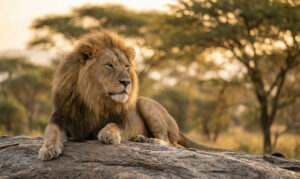
Rescued big cats often arrive with years of joint wear behind them. A former staffer remembers Synflex® arriving by the case in the early 2000s. Stock image.
We’re not working with lion sanctuaries these days. But the animal on your couch is built to the same blueprint as the ones at PrideRock, and the practical problem is identical — you have an aging carnivore with sore joints and strong opinions about being medicated.
Synflex for Pets (Beef Flavor) is our liquid formula for dogs and cats, made with the same quality standards as our human products:
As with anything you give an animal, have a word with your veterinarian first — especially for a very small pet, one already on medication, or one with an existing condition. And if your animal has had an accident or an acute injury, that’s a vet visit, not a supplement.
We love looking back at where Synflex has turned up over the years. Grandmothers in Florida, marathon runners in California, family dogs in New York — and, if the story holds, a few lions and tigers living out their retirement in Texas.
Do you have a mini-lion at home who’s slowed down a bit? Treat them like the royalty they clearly believe they are.
[Shop Synflex® for Pets (Beef Flavor)]
We honestly can’t say for certain. A former staff member at the sanctuary told us that Synflex donated liquid glucosamine to PrideRock by the case in the early 2000s, but our records from that period no longer exist and we can’t confirm the details independently. What we can confirm is that Synflex America has no current relationship with PrideRock, and nothing in this article should be read as an endorsement by the sanctuary.
Many arrive after years on concrete flooring, in undersized enclosures, or following poor nutrition during the years they were growing — all of which are hard on developing and weight-bearing joints. Sanctuary animals also tend to live considerably longer than wild ones, so caretakers are often managing geriatric animals carrying decades of accumulated wear.
Practicality. There is no safe way to pill a large carnivore, and capsules hidden in food get eaten around or spat out. A liquid can be poured directly over raw meat, and dosing by volume is straightforward for very large animals. It’s the same reason liquid formats are standard in equine supplements.
Structurally, yes — the same connective tissues, cartilage, and joint architecture, scaled up. The meaningful difference is load. The forces travelling through a lion’s joints when it lands from a jump are vastly greater than anything a domestic cat generates.
Yes. Glucosamine and chondroitin have a long and benign safety record in both species, with adverse effects uncommon and generally mild. That said, discuss any new supplement with your veterinarian first, particularly for small pets or animals already on medication.
We make a beef-flavoured liquid formula specifically for pets. Pour it over their food rather than trying to hide a pill. Talk to your veterinarian before starting any supplement, especially for small animals, pets on medication, or pets with existing health conditions.
Written by Louie Barone, Chief Technology Officer at Synflex America. Synflex’s liquid glucosamine formulas have been in continuous use since the late 90s, developed and continuously refined by a chemistry team that specializes in liquid supplement formulation and has studied the synergistic combinations of joint nutrients for more than 25 years. I joined Synflex in 2019 and have spent the years since working directly with customers, reviewing the peer-reviewed literature on glucosamine and joint nutrition, and supporting the team behind the formula.
This article recounts an unverified historical anecdote regarding Synflex America and PrideRock Wildlife Refuge. Synflex America is not a partner of PrideRock Wildlife Refuge, and nothing here should be read as an endorsement by the sanctuary. This article is for educational purposes and does not constitute veterinary advice. These statements have not been evaluated by the Food and Drug Administration. This product is not intended to diagnose, treat, cure, or prevent any disease in humans or animals. Consult a qualified veterinarian before giving any supplement to an animal.